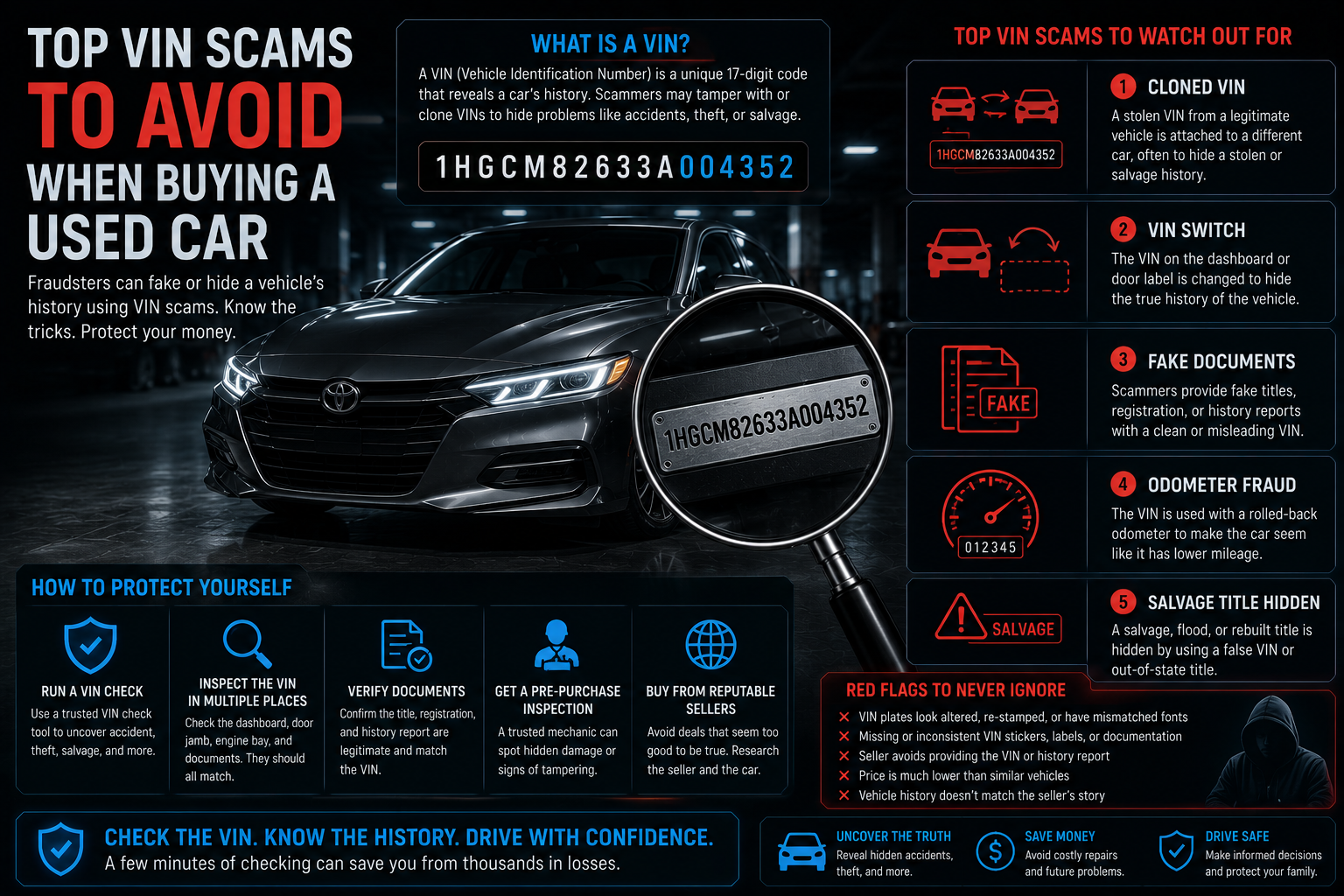
7 Dangerous VIN Scams to Avoid
1. The VIN Cloning Identity Theft
VIN cloning is one of the most professional VIN scams in existence. In this scenario, a criminal takes the VIN from a legally registered car and places it onto a stolen vehicle of the same make and model. This creates a “clone” that appears clean in national databases. If you unknowingly buy a cloned car, law enforcement can seize the vehicle once the fraud is discovered, leaving you with no car and no way to recover your money.
2. Fake VIN Report Websites
Some dishonest sellers will insist that you use a specific, obscure website for a history report. These are often VIN scams designed to steal your credit card information or charge you a high fee for a report full of fabricated data. Always insist on using a trusted, independent provider to ensure the information you are reading is verified and accurate.
3. Title Washing Across State Lines
Title washing is a tactic used to hide a “Salvage” or “Flood” brand on a vehicle’s title. Scammers move a damaged car to a state with different titling regulations, effectively “washing” the history clean. A thorough VIN search is the only way to see the car’s complete multi-state history and catch this type of deception before you sign the paperwork.
4. Mismatched Physical VIN Plates
A classic sign of VIN scams is a mismatch between the various identification plates on the car. You should always compare the VIN on the dashboard with the sticker on the driver-side door jamb and the stamping on the engine block. If the numbers don’t match exactly, the vehicle’s identity has been compromised, and you are likely looking at a stolen or illegally rebuilt car.
5. The “Too Good to Be True” Escrow Fraud
Many online VIN scams involve a vehicle priced significantly below market value. The “seller” will claim the car is being held in an escrow account or a shipping warehouse and will provide a VIN that checks out as clean. However, the VIN actually belongs to a different car entirely. Once you send the “escrow” payment, the seller disappears, and you realize the car never existed.
6. Altered Odometer Records
While modern odometers are digital, they are not immune to VIN scams. Dishonest parties use software to “roll back” the mileage, then attempt to create fake maintenance records that match the lower number. By cross-referencing the mileage reported in your VIN history with the physical dashboard, you can spot discrepancies that indicate the car has significantly more wear and tear than claimed.
A clean-looking car can still be part of VIN scams if it has an undisclosed lien. If the seller owes money on the car, the lender technically owns the title. If you buy a car with an active lien, the bank can repossess it from you. Always verify that the VIN shows a “Lien-Free” status to ensure the seller has the legal right to transfer ownership to you.
Protecting yourself from VIN scams is an ongoing process that requires the right tools. While physical inspections are necessary, they are only half the battle. To ensure the vehicle you are looking at hasn’t been cloned or altered, you should check a VIN for free using our secure database. This simple step provides the digital confirmation you need to verify a seller’s honesty and keep your investment safe.
How to Protect Yourself Today
Avoiding VIN scams requires a combination of digital research and physical due diligence. You should never rely solely on documents provided by the seller, as these can be easily forged or altered to hide a vehicle’s troubled past. Instead, take control of the transaction by performing your own independent investigation. Start by verifying the vehicle’s safety record and checking for open safety recalls through the Official NHTSA Database. This ensures the car hasn’t been flagged for major manufacturer defects that the seller might be ignoring.
In addition to digital checks, always insist on a professional pre-purchase inspection (PPI) by a mechanic of your choosing. A trained technician can spot the subtle physical signs of VIN scams, such as non-factory rivets on the dashboard or mismatched paint in the engine bay that suggests a front-end clip was welded on from a different car. By staying vigilant, cross-referencing multiple data points, and using trusted tools like VinForFree, you can navigate the used car market with total confidence and ensure your next vehicle purchase is a safe and legal investment.
Frequently asked questions
What is VIN cloning?
VIN cloning is when a criminal takes the VIN from a legally registered car and puts it on a stolen vehicle of the same make and model. If you buy a cloned car, law enforcement can seize it once the fraud is discovered.
Should I use the history report website a seller suggests?
No. Some sellers push obscure websites that are scams designed to take your card details or sell fabricated reports. Use a trusted, independent provider; see how much a vehicle history report costs.
How can I tell if the odometer was rolled back?
Compare the mileage reported in the VIN history with the mileage on the dashboard. Discrepancies suggest the car has more wear than claimed.

Leave a Reply