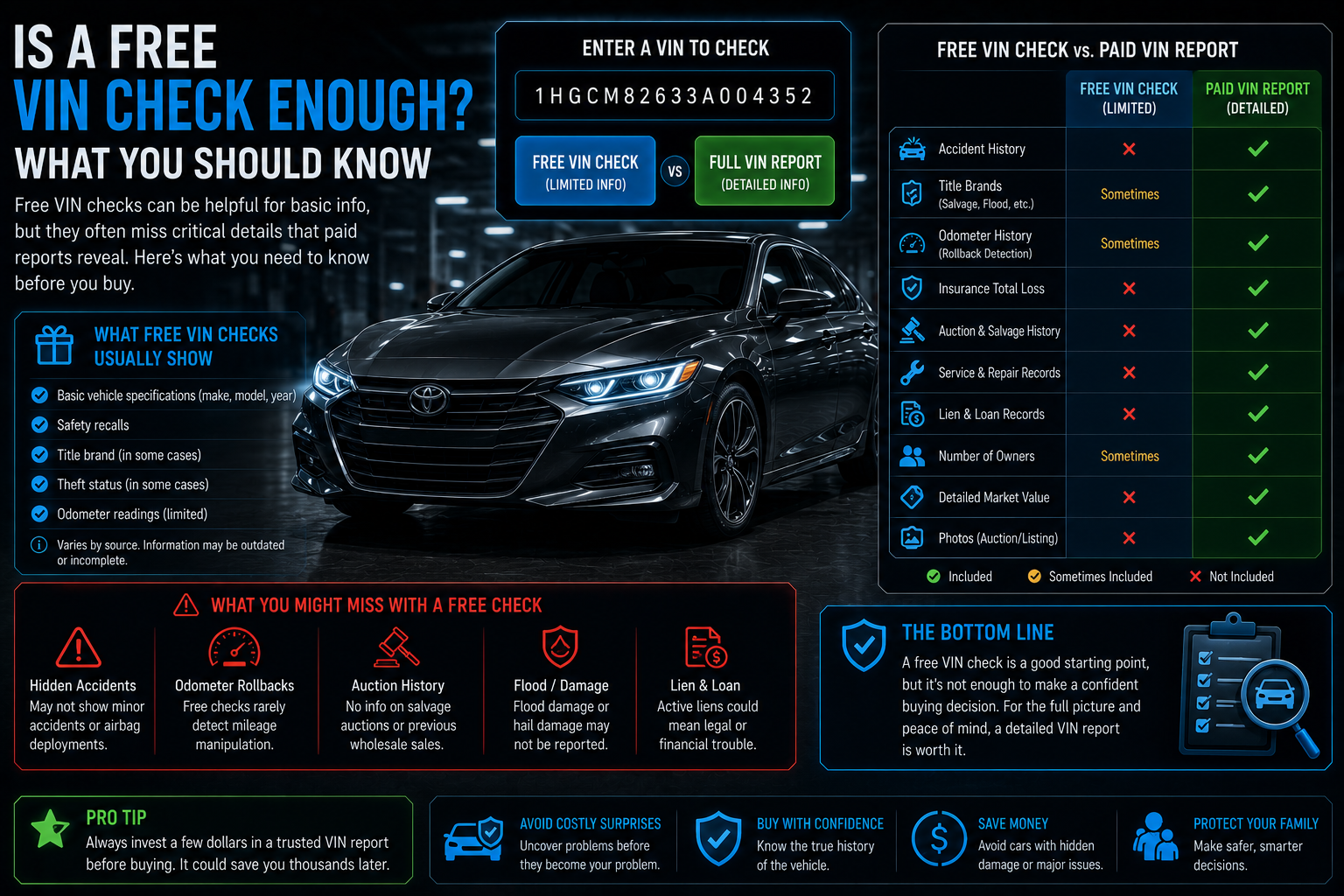
7 Things to Know About a Free VIN Check
1. Verification of Basic Specifications
A standard free VIN check is excellent for confirming that the car in front of you matches its digital record. It will decode the year, make, model, and engine type. This is your first line of defense against “VIN switching,” where a seller might put a clean VIN plate on a different vehicle. If the report says the car should be a V6 and you see a four-cylinder engine, you’ve already saved yourself from a potential scam.
2. Access to Open Safety Recalls
Most reputable platforms include safety recall data in their free VIN check results. This information comes directly from manufacturer databases and the NHTSA. Knowing if a car has an “Open” recall for a dangerous issue, like a faulty airbag or braking system, is a critical safety step that doesn’t cost a dime but can save lives.
3. The Gap in Accident History
The biggest limitation of a free VIN check is often the lack of detailed accident records. While some free tools might flag a “Total Loss,” they rarely provide the specific dates or severity of minor to moderate collisions. For a full picture of every fender-bender the car has endured, a more detailed data search is often necessary to ensure the frame remains structurally sound.
4. Title Brand Transparency
A free VIN check can usually tell you if a title is “Clean” or “Branded” (such as Salvage or Rebuilt). However, it may not show you the “Title History” across different states. Dishonest sellers sometimes move cars to states with laxer laws to “wash” a title. To catch this, you need a search that tracks the vehicle’s movement through various DMV systems over time.
5. Odometer Fraud Detection
Digital odometers can be rolled back just as easily as mechanical ones. A free VIN check might show the last reported mileage, but it may not show the “mileage trajectory” over several years. Seeing a steady increase in mileage followed by a sudden drop in a later report is a massive red flag that only comprehensive data can consistently reveal.
When you run a free VIN check, you are looking for more than just mechanical health; you are looking for legal health. If a car has an outstanding lien, the seller doesn’t actually own it outright. Buying a car with a lien means the bank could repossess it from you later. Verifying a “Lien-Free” status is a crucial step in the closing process of any used car deal.
7. Screening Out Lemons Early
Think of a free VIN check as a high-speed filter. It allows you to discard 90% of bad listings instantly without spending a cent. Once you’ve narrowed your list down to one or two “finalists,” that is when it makes sense to invest more time or resources into deeper inspections. You can start your free VIN check here to begin filtering your options today.
Building a Total Safety Strategy
Ultimately, a free VIN check is a powerful tool, but it should be part of a broader, multi-layered safety strategy. No digital report, regardless of how detailed it is, can fully replace a physical inspection conducted by a qualified mechanic. You should always use the data you find online to ask the seller pointed, better-informed questions. If the digital history shows a gap in service or a recent title transfer that the seller cannot explain, it is often safer to walk away from the deal entirely.
The gold standard for any used car purchase is combining your initial digital research with a professional “Pre-Purchase Inspection” (PPI). While the free VIN check flags the obvious “lemons” and title scams, a mechanic can identify active oil leaks, worn suspension components, or signs of a cheap engine repair that wouldn’t appear in a database for months.
To ensure the highest level of safety, you should also cross-reference your VIN with the Official NHTSA Recall Database to check for unrepaired safety defects. Furthermore, understanding the ISO 3779 standards for vehicle identification can help you spot if a VIN plate has been illegally altered. By using VinForFree as your first line of defense and these official government resources as your second, you create a shield of transparency that ensures your next vehicle is a reliable asset rather than a financial burden.
A free report is a vital first step in your car-buying journey, but it works best when used as a filter to narrow down your options. Once you have identified a vehicle that passes the initial screening, you should check a VIN for free using our updated database to ensure you have the most current information available. By combining digital data with a professional inspection, you can move forward with the confidence that your next vehicle is both safe and a sound investment.
Frequently asked questions
What does a free VIN check show?
A free VIN check decodes the year, make, model and engine type, and most reputable platforms also show open safety recalls from NHTSA data. More details are in our free VIN check FAQ.
What can a free VIN check miss?
It often lacks detailed accident records, the title history across different states, and the mileage trajectory over several years. See free VIN check vs full report.
When should I go beyond a free VIN check?
Use the free check as a filter. Once you have narrowed your list to one or two finalists, invest in deeper checks and a pre-purchase inspection by a qualified mechanic.
- Free VIN Lookup — No Account, No Signup, No Credit Card
- How much does a vehicle history report cost?
- What a $4.99 vehicle history report includes
Related reading: How Accurate Are Free VIN Check Tools?

Leave a Reply