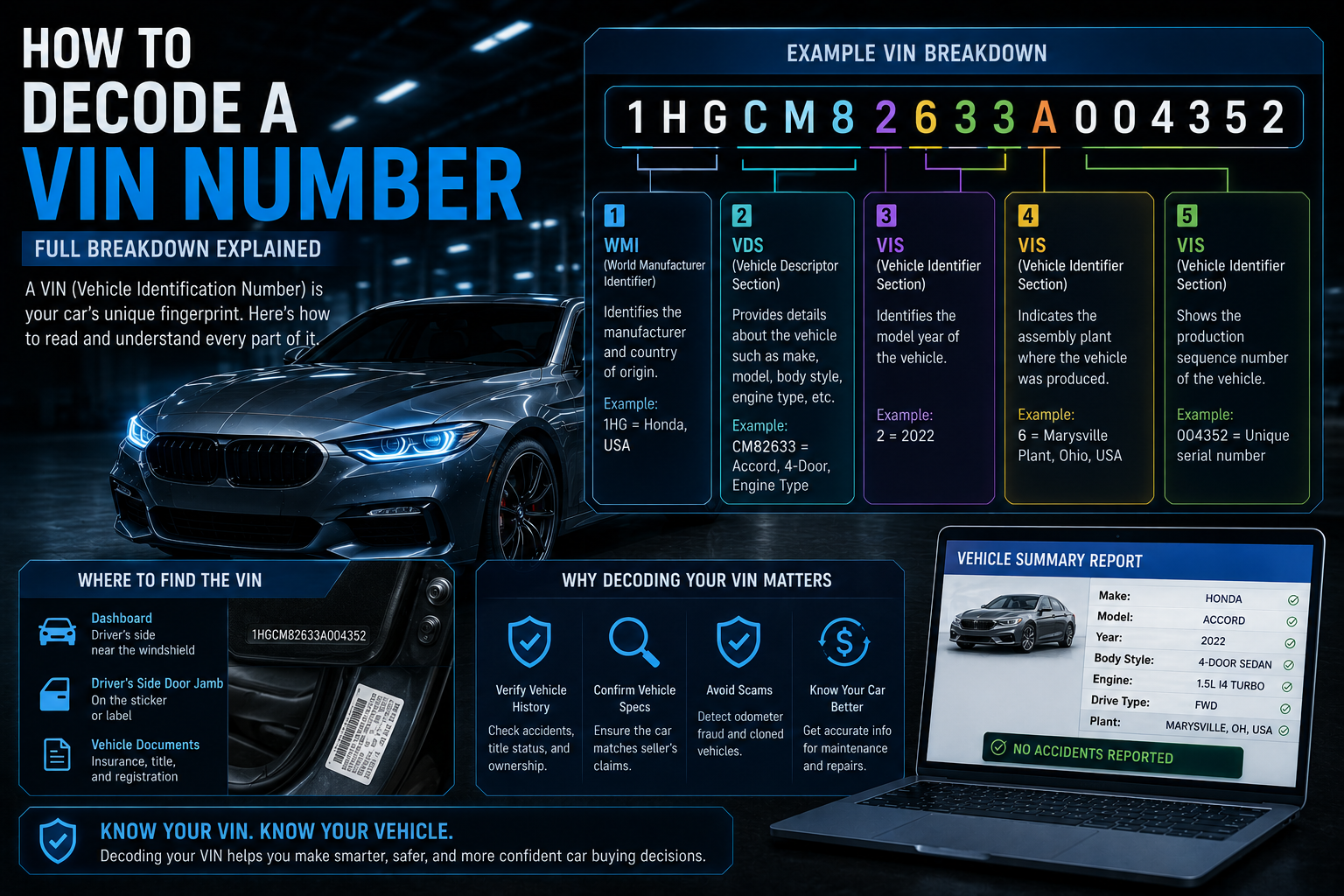
7 Steps to Decode a VIN Number
1. Identify the World Manufacturer Identifier (WMI)
The first three characters of any VIN are known as the WMI. To decode a VIN number successfully, you must start here to find the country of origin and the manufacturer. For example, a VIN starting with ‘1’, ‘4’, or ‘5’ indicates the car was assembled in the United States, while ‘J’ represents Japan. The second and third characters narrow it down to the specific company, such as ‘HG’ for Honda or ‘FA’ for Ford.
2. Understand the Vehicle Descriptor Section (VDS)
Characters four through eight make up the VDS, which provides a technical snapshot of the vehicle’s “DNA.” This section allows you to decode a VIN number to find the model type, body style, engine size, and even the safety restraint systems installed at the factory. This is particularly useful for buyers who want to ensure the engine under the hood is the one the car was originally built with.
3. Calculate the Security Check Digit
The ninth character is one of the most fascinating parts of the VIN. It is a “check digit” used to verify that the decode a VIN number process is legitimate and that the VIN itself isn’t a fake. This character is calculated using a complex mathematical formula based on the other 16 characters. If the math doesn’t add up, it’s a major red flag that the VIN plate may have been tampered with.
4. Determine the Model Year
The tenth character is the universal code for the vehicle’s model year. To decode a VIN number for age, you look for letters or numbers assigned to specific years (for example, ‘R’ represents 2024). Knowing this allows you to catch sellers who might misrepresent a 2012 model as a 2014, ensuring you pay a fair market price for the actual age of the car.
5. Locate the Assembly Plant Code
The eleventh character identifies the specific factory where the vehicle was put together. Manufacturers often have multiple plants across the globe, and some plants are known for higher build quality or specific regional variations. When you decode a VIN number, this digit tells you exactly which assembly line the vehicle rolled off of before it reached the dealership.
6. Read the Unique Serial Number
Characters twelve through seventeen are the production sequence numbers. While the rest of the VIN describes a “type” of car, these final six digits identify your specific car. If you are looking at a limited-edition vehicle, these numbers can tell you if you have the 1st or the 10,000th unit produced, which can significantly affect the vehicle’s collectible value.
7. Use a Digital Decoder for Precision
While manual decoding is a great skill, using a digital tool is the most efficient way to decode a VIN number without errors. Digital decoders cross-reference your characters against massive manufacturer databases to provide a full report in seconds. You can use our free VIN decoder here to get a comprehensive breakdown of any vehicle’s specifications instantly.
Global Standards for VIN Decoding
The structure used to decode a VIN number is not arbitrary; it follows strict international standards. Most of the identification logic is governed by ISO 3779, which ensures that every manufacturer across the globe uses a compatible 17-character format.
Furthermore, if you discover a safety issue while decoding your vehicle, you should immediately cross-reference your findings with the Official NHTSA Recall Database. Verifying your factory data against these official government records is the only way to ensure your vehicle is safe for the road.
While understanding the logic behind each character is a great skill for any car buyer, manual decoding can be time-consuming. To get the most accurate results without the guesswork, you can decode a VIN number instantly using our free search tool. This ensures you have the complete factory specifications and history at your fingertips before making any final decisions.
Conclusion: Why Decoding is Essential
Mastering the ability to decode a VIN number protects you from fraud and ensures you are making a data-driven purchase. Whether you are verifying a car’s engine specs or checking for title brands, the VIN is your most reliable source of truth. Always combine your digital decoding with a physical inspection of the VIN plates on the dashboard and door jamb to ensure they match the paperwork.

Leave a Reply