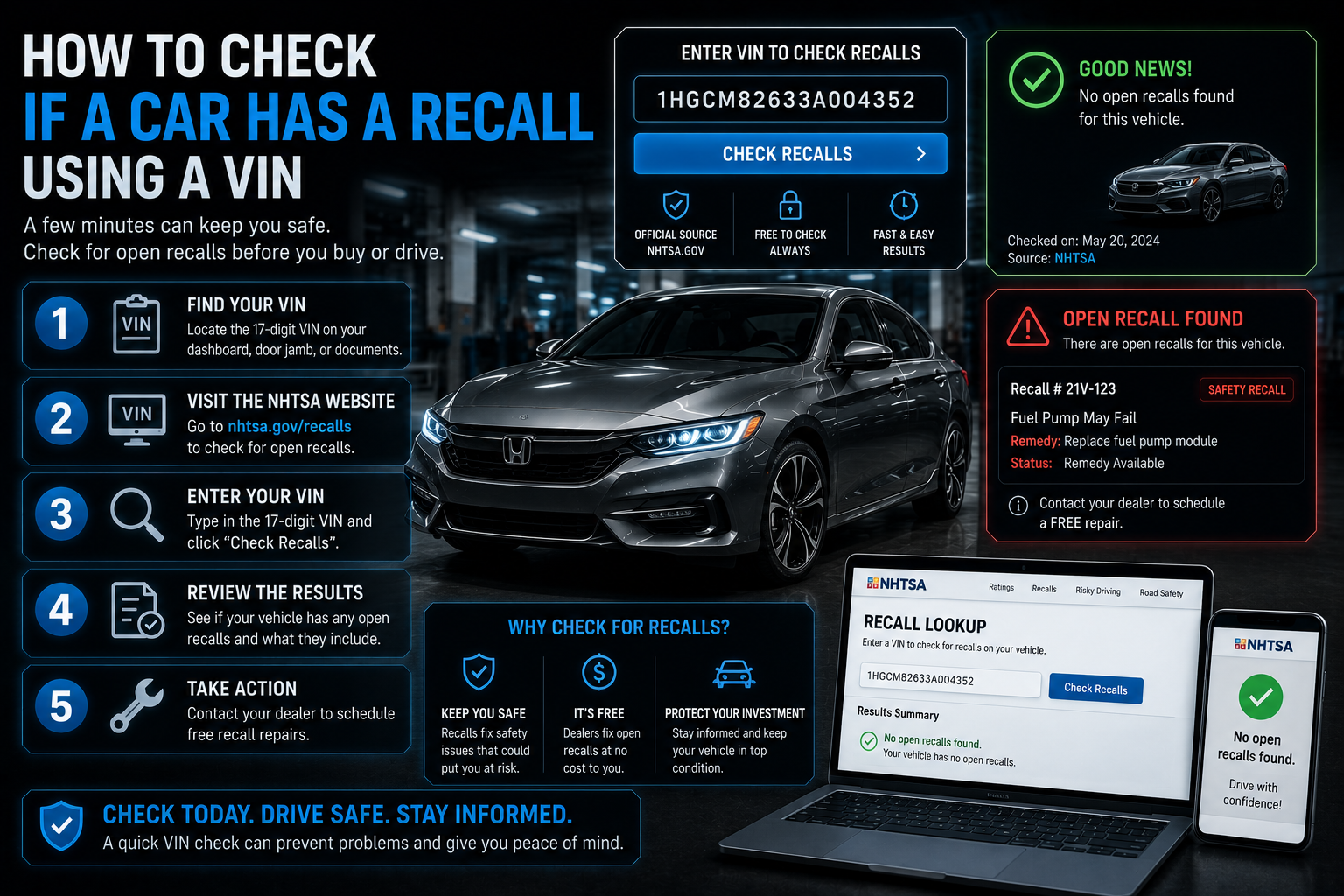
7 Essential Facts About a Car Recall Check
1. Identifying Safety Defects Early
The primary purpose of a car recall check is to identify latent defects that could lead to accidents or injuries. These issues range from minor electrical glitches to severe mechanical failures, such as faulty braking systems or unintended acceleration. By running your VIN through a search tool, you can see exactly which components the manufacturer has flagged as high-risk for your specific year and model.
2. Understanding the Role of the NHTSA
Most safety data used in a car recall check is aggregated by the National Highway Traffic Safety Administration. This federal agency monitors consumer complaints and manufacturer reports to identify patterns of failure. When you check your VIN, you are accessing a direct feed of government-verified safety data, ensuring that the information you receive is both accurate and up-to-date.
3. Free Repairs for Open Recalls
One of the most important things to realize during a car recall check is that the repairs are almost always free. By law, manufacturers must provide a remedy for safety recalls at no cost to the consumer if the vehicle is within a certain age. If your VIN lookup reveals an “Open” status, you can simply contact a local dealership to schedule a repair without worrying about the bill.
4. Differentiating Recalls from Service Bulletins
During your car recall check, you might encounter Technical Service Bulletins (TSBs). Unlike safety recalls, TSBs are suggested repairs for non-safety related issues, like a squeaky interior panel or a software update for the radio. While recalls are legally mandated safety fixes, TSBs are recommendations to help mechanics solve common problems more efficiently.
5. The Impact on Vehicle Resale Value
A vehicle with unresolved safety issues is much harder to sell and carries a lower market value. Performing a car recall check before listing your car for sale allows you to clear any “Open” statuses, proving to potential buyers that the vehicle has been meticulously maintained. Conversely, as a buyer, finding multiple open recalls can be a powerful negotiation tool to lower the asking price.
6. Checking for “Incomplete” Repair Statuses
A car recall check will tell you if a repair is “Remedy Not Yet Available” or “Incomplete.” If the remedy isn’t available, it means the manufacturer knows there is a problem but is still designing the fix or waiting for parts. If it says “Incomplete,” it means the fix is ready, but the previous owner simply never took the car to the dealership to have the work performed.
7. Verifying Manufacturer Communications
Sometimes, recall notices sent by mail never reach the current owner, especially if the car has changed hands multiple times. A digital car recall check acts as a backup system, ensuring that you stay informed even if the manufacturer doesn’t have your current address on file. You can run a free VIN check here to see if your vehicle has any outstanding safety notices that you might have missed in the mail.
Staying on top of safety notifications is a vital part of responsible vehicle ownership. While a car recall check gives you the peace of mind that your vehicle meets federal safety standards, it is only effective if you act on the information provided. To ensure your car is completely up to date with the latest manufacturer data, you can check a VIN for free using our lookup tool. This simple step helps you verify that no hidden safety defects are putting you or your passengers at risk.
Final Steps for Vehicle Safety
Once your car recall check is complete, the next step is action. If an open recall is found, locate your nearest authorized dealership and provide them with your VIN to order necessary parts. Remember that while digital reports are excellent for safety, they do not replace a physical inspection. Always check the NHTSA Recall Database for the most recent updates and consult with a professional mechanic if you notice any unusual driving behavior, regardless of what the report says.

Leave a Reply