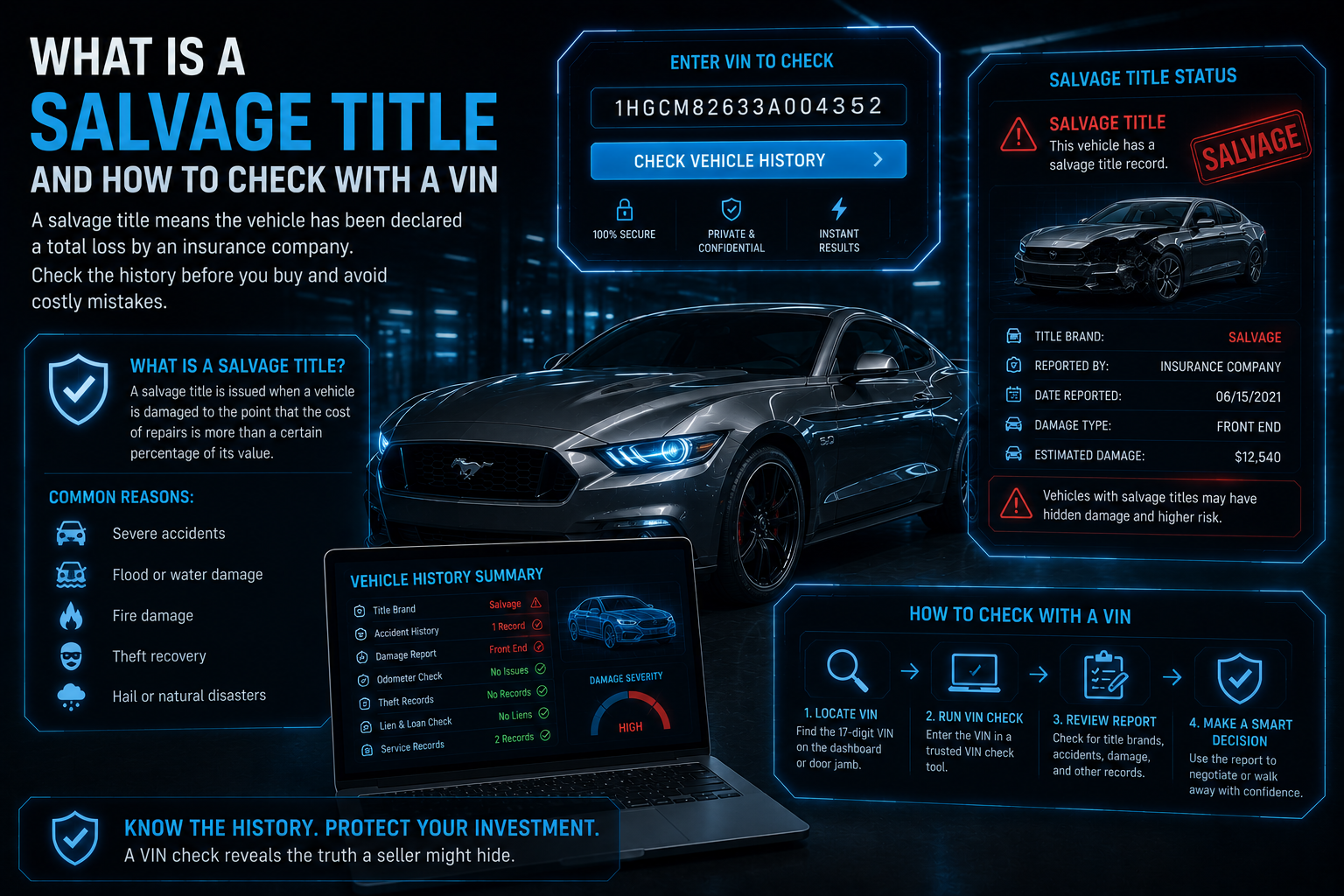
When navigating the used car market, encountering a salvage title is a common occurrence that requires careful consideration. This designation serves as a formal notification that an insurance company has declared the vehicle a total loss due to significant damage. This damage typically stems from a major collision, but it can also be triggered by environmental factors such as flooding, fire, or even recovery after a theft where the vehicle was missing for an extended period. Because the cost of returning the car to its original factory condition exceeds its current market value, the state issues this specific title to alert future owners of its history.
Why a Salvage Title Matters to Buyers
The primary reason a salvage title matters so much to a potential buyer is the inherent uncertainty regarding the quality of any subsequent repairs. While some vehicles are professionally restored to high standards, others may have been patched together with used parts or have hidden structural compromises that affect the car’s ability to protect passengers in a future crash. Beyond safety, these vehicles often carry a significantly lower resale value—sometimes up to 50% less than a clean-titled equivalent—and can be much more difficult to finance or insure through traditional providers.
How to Identify a Salvage Title Using a VIN
Utilizing a 17-character identification number is the most effective method to verify the status of a vehicle before you ever meet a seller in person. By performing a search, you can see if a salvage title was ever issued in a different state, a practice sometimes used by dishonest sellers to “wash” a title and make it appear clean. The digital record acts as a permanent ledger of the car’s major life events, providing transparency that a simple visual inspection cannot offer. You can run a free VIN check here to instantly see if the car you are considering has a hidden history.
Deciding whether a vehicle with a salvage title is worth the investment depends largely on your mechanical knowledge and intended use for the car. For a dedicated track car or a secondary vehicle for short commutes, the cost savings might be justified if you can verify the repairs were done correctly. However, for a primary family vehicle, the risks associated with frame alignment and airbag reliability often outweigh the initial discount. Always consult the NHTSA Safety Databases to see if the vehicle is also subject to any outstanding safety recalls that could complicate the restoration process.
Before finalizing a purchase, you should always request a “before” photo of the damage from the seller to understand exactly what caused the total loss. A car that was salvaged due to a hail storm is a much safer bet than one that was submerged in salt water or involved in a high-speed front-end collision. Furthermore, check the IIHS Ratings for the specific year and model to understand its baseline safety performance. Combining this data with a professional inspection ensures that a salvage title doesn’t turn into a financial nightmare.
Understanding a salvage title is about balancing risk with reward. While the low price tag of a total-loss vehicle is tempting, the digital history of the car is the only thing that doesn’t lie. To protect your investment and ensure your safety on the road, you should always check a VIN for free to uncover the specific insurance records and auction photos that reveal the true extent of a vehicle’s past damage before you buy.
Frequently asked questions
What does a salvage title mean?
It means an insurance company has declared the vehicle a total loss, usually after a major collision, but also after flooding, fire, or a theft where the car was missing for a long time, because the repair cost was higher than the car’s market value.
Can a VIN check show a salvage title from another state?
Yes. A VIN search can show whether a salvage title was ever issued in a different state, which helps catch sellers who move a car to “wash” its title. See what a free check and a full report include.
Is a car with a salvage title worth buying?
It depends on your mechanical knowledge and how you will use the car. For a secondary or track car the savings may be justified if you can verify the repairs; for a primary family vehicle, the risks around frame alignment and airbags often outweigh the discount. Ask the seller for photos of the damage and get a professional inspection.
- Can a VIN Tell You If a Car Was in an Accident?
- What a $4.99 vehicle history report includes
- How to Check Vehicle History Before Buying a Used Car

Leave a Reply