Blog

  • Where to Find Your VIN Number (Complete Guide With Locations)

    Where to Find Your VIN Number (Complete Guide With Locations)

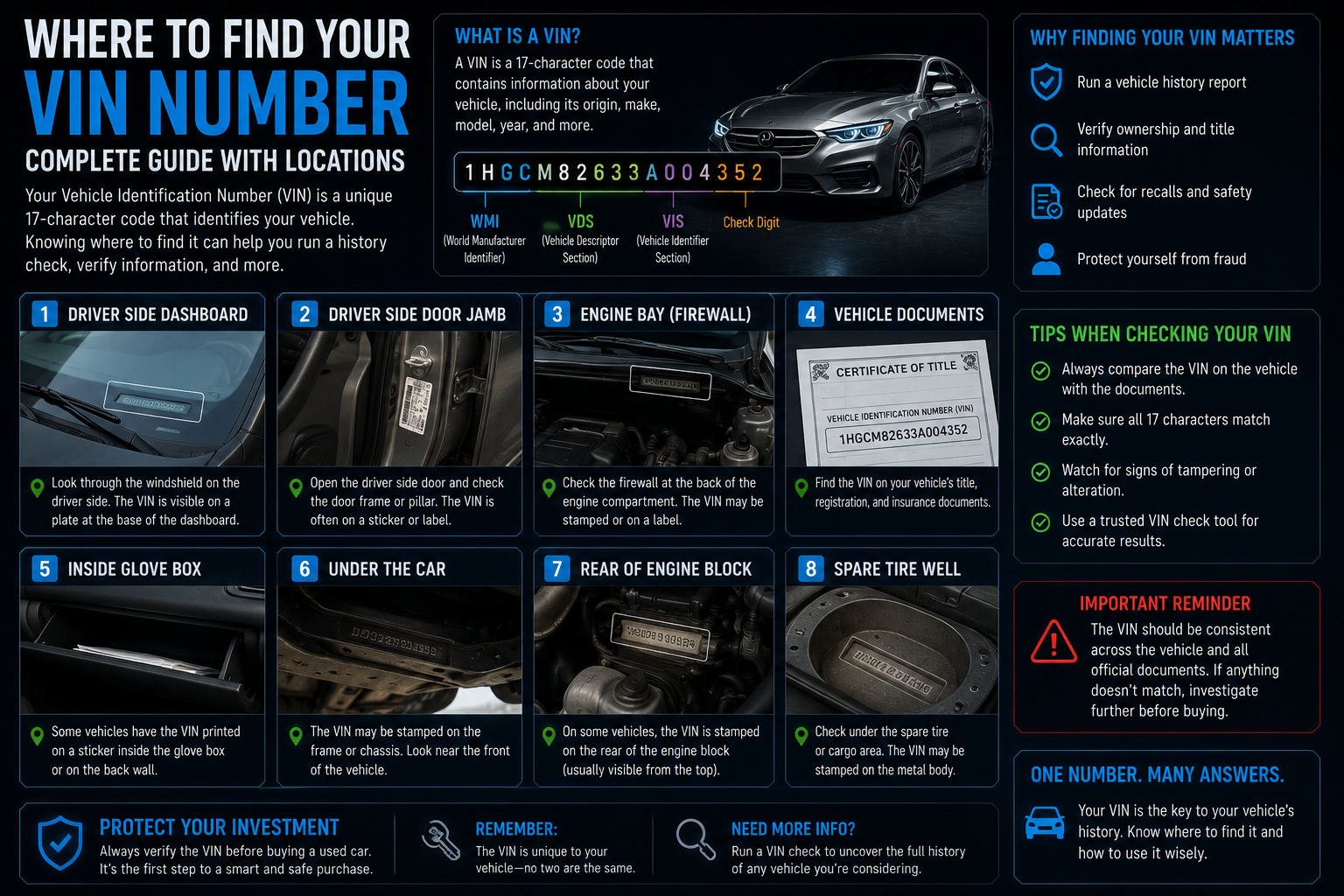
    Short answer: on most cars the VIN is on the driver’s side dashboard, visible through the lower corner of the windshield, and on a sticker on the driver-side door jamb. It is also printed on your registration card, your insurance ID card and the vehicle title.

    7 Best Ways to Find Your VIN Number

    1. The Dashboard (Windshield View)

    The most universal location to find your VIN number is on the driver’s side dashboard, right where the glass meets the hood. To see it clearly, you should stand outside the vehicle and look through the lower corner of the windshield. This metal plate is designed to be permanent and easily visible to law enforcement or inspectors without needing to enter the vehicle, making it the primary point of reference for most VIN decoders.

    2. The Driver-Side Door Jam

    Another highly reliable physical location is the B-pillar, which is the frame visible when you open the driver’s side door. Look for a durable sticker or metal plate that contains technical data such as tire pressure and gross vehicle weight. In the midst of this information, you will find your VIN number printed clearly. This sticker is built to be tamper-evident; if it looks peeled or scratched, it could be a sign of vehicle cloning or a previous major accident.

    3. Under the Hood (Engine Block)

    For older vehicles or specific European imports, you might need to pop the hood to find your VIN number. It is often stamped directly onto the front of the engine block or the firewall (the metal partition between the engine and the cabin). This location is used as a secondary verification point to ensure the engine currently in the car actually belongs to the chassis it was manufactured with.

    4. Inside the Spare Tire Well

    If the external locations are obscured by dirt or damage, you can often find your VIN number hidden in the trunk. Many manufacturers stamp the identification number onto the floor pan, specifically under the spare tire or tucked into the corner of the trunk lining. This is considered a “hidden” VIN and is frequently used by authorities to identify stolen vehicles that have had their dashboard plates removed.

    5. Official Vehicle Registration Documents

    If you don’t have physical access to the car, the easiest way to find your VIN number is by looking at your state-issued registration card. This document is required to be in the vehicle at all times and will always list the 17-digit code. Always double-check that the number on your paperwork matches the number physically stamped on the dashboard to avoid administrative errors at the DMV.

    6. Your Insurance Policy Paperwork

    Insurance companies rely heavily on the VIN to determine the correct premium for your specific make and model. Consequently, you can always find your VIN number on your insurance ID card or your full policy declaration page. If you use a mobile app for your insurance provider, the VIN is usually listed under the “Vehicle Details” or “Coverage” section for quick access.

    7. The Vehicle Title (Pink Slip)

    The vehicle title is the ultimate legal proof of ownership, and it serves as the definitive source to find your VIN number. Before purchasing a used car, you should always compare the VIN printed on the title with the VIN on the dashboard. If there is even a one-digit discrepancy, it could indicate a “title washing” scam or a clerical error that could make the car impossible to register in your name later.

    Knowing exactly where to find your identification number is the first step in verifying a vehicle’s legitimacy. Once you have located the 17-digit code on the dashboard or door jamb, you should find your VIN number in our database to pull a full history report. Cross-referencing the physical locations with a digital check is the best way to ensure the car you are looking at is safe, legal, and worth the investment.

    Final Verification Steps

    Once you find your VIN number, it is crucial to verify its safety status. You should cross-reference your identification number with the Official NHTSA Recall Database to ensure there are no life-threatening defects currently flagged for your car. Furthermore, understanding the ISO 3779 international standards can help you decode the characters and verify the factory specs. If you have any doubts about the vehicle’s past, you can run a free VIN check here to get a comprehensive history of the car’s ownership and maintenance records.

    Frequently asked questions

    Where is the VIN on most cars?

    On the driver’s side dashboard, where the glass meets the hood. Stand outside the car and look through the lower corner of the windshield.

    Can I find the VIN without the car?

    Yes. It is printed on your state registration card, your insurance ID card or policy declaration page, and the vehicle title.

    What if the VIN on the title does not match the car?

    Even a one-digit difference could point to a title washing scam or a clerical error that could make the car impossible to register in your name. Resolve it before you buy. More answers are in our free VIN check FAQ.

    Related guides

  • How to Check a VIN for Free

    How to Check a VIN for Free

    7 Best Ways to Check a VIN for Free

    1. Use an Independent Free VIN Lookup Tool

    The fastest way to check a VIN for free is through a dedicated search engine that aggregates data from multiple public sources. These tools allow you to enter a 17-digit code and instantly receive a breakdown of the car’s year, make, model, and engine type. This is an essential first step for verifying that the vehicle you are physically inspecting matches its legal identity. You can check a VIN for free right here to start your search immediately.

    2. Search the National Insurance Crime Bureau (NICB)

    If you want to check a VIN for free specifically for theft or total loss records, the NICB VinCheck is an invaluable resource. This tool is powered by data from hundreds of insurance companies and will tell you if a vehicle has been reported as stolen or if it has been issued a “Salvage” title due to extreme damage. It is a non-profit service designed to prevent consumers from unknowingly purchasing a “totaled” car.

    3. Verify Open Safety Recalls via the NHTSA

    Safety should always be your top priority. You can check a VIN for free for any unrepaired safety defects using the Official NHTSA Recall Database. Manufacturers are legally required to fix these issues at no cost to you, but thousands of cars are sold with dangerous, “open” recalls. A quick lookup will tell you if a car has a faulty airbag, fire risk, or braking issue that needs immediate professional attention at a dealership.

    4. Check for Odometer Discrepancies

    Dishonest sellers often perform “odometer rollbacks” to make a car appear less used than it actually is. When you check a VIN for free, look for any mileage logs reported during previous sales or emissions tests. If the history shows the car had 100,000 miles two years ago, but the dashboard currently shows 70,000, you have identified a clear case of fraud. Comparing these data points is the only way to verify the true wear and tear on the engine.

    5. Research Title Brands and Liens

    A car might look perfect, but it could have a legal “cloud” over its title. To check a VIN for free for liens, you are looking for any outstanding loans where a bank still technically owns the vehicle. Additionally, you should look for “Title Brands” like Flood, Hail, or Lemon Law Buyback. These brands stay with the VIN forever and can significantly lower the resale value of the car, even if it has been perfectly repaired.

    6. Decode Factory Specifications and Options

    Sometimes you need to check a VIN for free just to see what equipment the car originally came with. By using a VIN decoder, you can see the original exterior paint code, interior trim, and even the gear ratio of the transmission. This is incredibly helpful for enthusiasts looking for a specific performance package or for buyers wanting to ensure that a “loaded” car actually has the premium features it is being advertised with.

    7. Look Up International ISO Standards

    Understanding how the 17 characters are structured can help you check a VIN for free manually. The ISO 3779 standards dictate how every manufacturer in the world must identify their vehicles. By learning the basic logic of the WMI (World Manufacturer Identifier) and the VDS (Vehicle Descriptor Section), you can spot a “fake” or altered VIN plate just by looking at the characters and realizing they don’t follow the legal formatting rules.

    Taking the time to check a VIN for free is the single best way to protect yourself from fraud, safety defects, and hidden mechanical issues. While digital data is a powerful ally, always remember to verify the information with a physical inspection. If you have a 17-digit code ready, you can check a VIN for free using our instant search tool to get a comprehensive look at any vehicle’s history today.

    Conclusion: Why Due Diligence Matters

    Learning how to check a VIN for free is a superpower for the used car buyer. It removes the guesswork from the transaction and puts the power back in your hands. While no single report can catch 100% of a car’s history, combining multiple free sources creates a comprehensive safety net. Always remember to back up your digital research with a physical inspection by a trusted mechanic to ensure the car’s mechanical health matches its digital record.

    Frequently asked questions

    Where can I check a VIN for free?

    You can use an independent free lookup tool such as our free VIN check, the NICB VinCheck for theft and total-loss records, and the NHTSA recall database for open safety recalls.

    Which title brands should I look for?

    Look for brands such as Salvage, Flood, Hail or Lemon Law Buyback. These brands stay with the VIN and can lower resale value even after repairs.

    Can a VIN check reveal an odometer rollback?

    Look for mileage logged at earlier sales or emissions tests. If the history shows higher mileage in the past than the dashboard shows now, that is a clear sign of fraud.

    Related guides