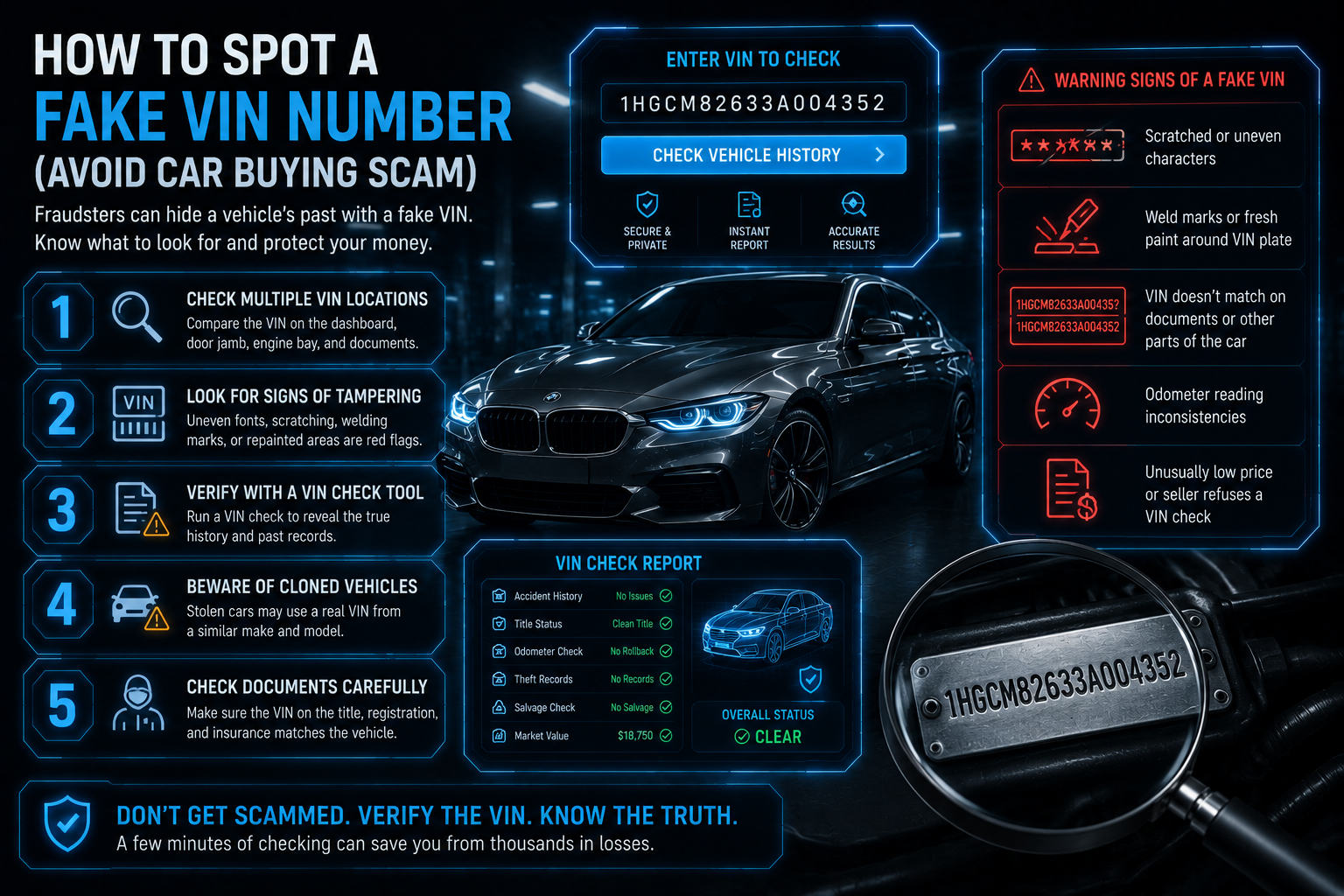
7 Ways to Spot a Fake VIN Number
1. Inspect the Dashboard Plate Rivets
The most common place to find a fake VIN number is on the driver-side dashboard near the windshield. Manufacturers use specialized, often flower-shaped or proprietary rivets to attach this plate. If you see standard pop rivets, glue, or screws holding the plate in place, it is a definitive sign of tampering. Scammers often scratch or bend the plate while trying to swap it, so any physical deformity in this area should be treated as a major red flag.
2. Verify the Font and Alignment
Manufacturers use high-precision machines to stamp or etch VINs. On a legitimate vehicle, the characters will be perfectly aligned, evenly spaced, and use a very specific typeface. If the characters on the dashboard or door jamb appear crooked, have varying depths, or look like they were hand-stamped, you are likely looking at a fake VIN number. Pay close attention to the “I,” “O,” and “Q,” which are never used in real VINs to avoid confusion with numbers.
3. Check for “Title Washing” Indicators
Scammers use a fake VIN number to perform “title washing,” which involves moving a car to a different state to hide a salvage or flood brand. When you run a free VIN check, look at the registration history. If the car has been registered in three different states in the last six months, the seller may be trying to hide a branded title associated with the car’s original identity.
4. Cross-Reference Multiple Locations
A vehicle’s identity isn’t just on the dashboard. To catch a fake VIN number, you must compare the dashboard plate with the sticker on the driver-side door jamb, the stamping on the engine block, and the labels found under the spare tire or on the frame. Scammers often forget to change the “hidden” VINs. If even one character is different between these locations, the car’s identity has been compromised.
5. Match the Vehicle DNA
Every fake VIN number belongs to a different car. When you perform a digital lookup, the report will tell you the original factory specifications. If the VIN decodes to a luxury trim with leather seats and a sunroof, but the car you are standing in front of has cloth seats and no sunroof, the VIN does not belong to that chassis. This “DNA mismatch” is the fastest way to prove a cloning scam is taking place.
6. Look for Chemical Alterations
Some advanced scammers use chemicals to “melt” the surface of plastic VIN stickers on the door jamb to rewrite the numbers. If the sticker feels sticky to the touch, looks blurred, or has a different texture than the rest of the door’s interior, it has likely been altered. A real manufacturer sticker is designed to be tamper-evident; if someone tries to peel it off, it will usually tear or leave a “VOID” pattern behind.
7. Compare Records with the Physical Title
Always ask to see the physical title before running your check. A fake VIN number scam often involves forged paperwork. If the VIN on the title is perfectly clean but the number on the car shows up in the NHTSA Recall Database with a different owner or location history, you have uncovered a scam. Always ensure the seller’s ID matches the name printed on the title to avoid “jumped title” fraud.
Spotting a fake VIN is the most critical step in avoiding a total loss on a used car purchase. Once you have inspected the physical rivets and stickers for signs of tampering, you should check a VIN for free using our database to ensure the vehicle’s digital history matches the physical identity you see on the dashboard.
Summary of VIN Safety
Taking ten minutes to verify a fake VIN number can save you thousands of dollars and legal headaches. While scammers are getting better at cloning, they rarely have the tools to match the factory precision of a real manufacturer. By combining a physical inspection of the rivets and font with a digital history report, you create a shield of transparency that scammers cannot penetrate. Never rush a purchase; if the VIN seems suspicious, the deal isn’t worth the risk.

Leave a Reply