7 Best Ways to Find Your VIN Number
1. The Dashboard (Windshield View)
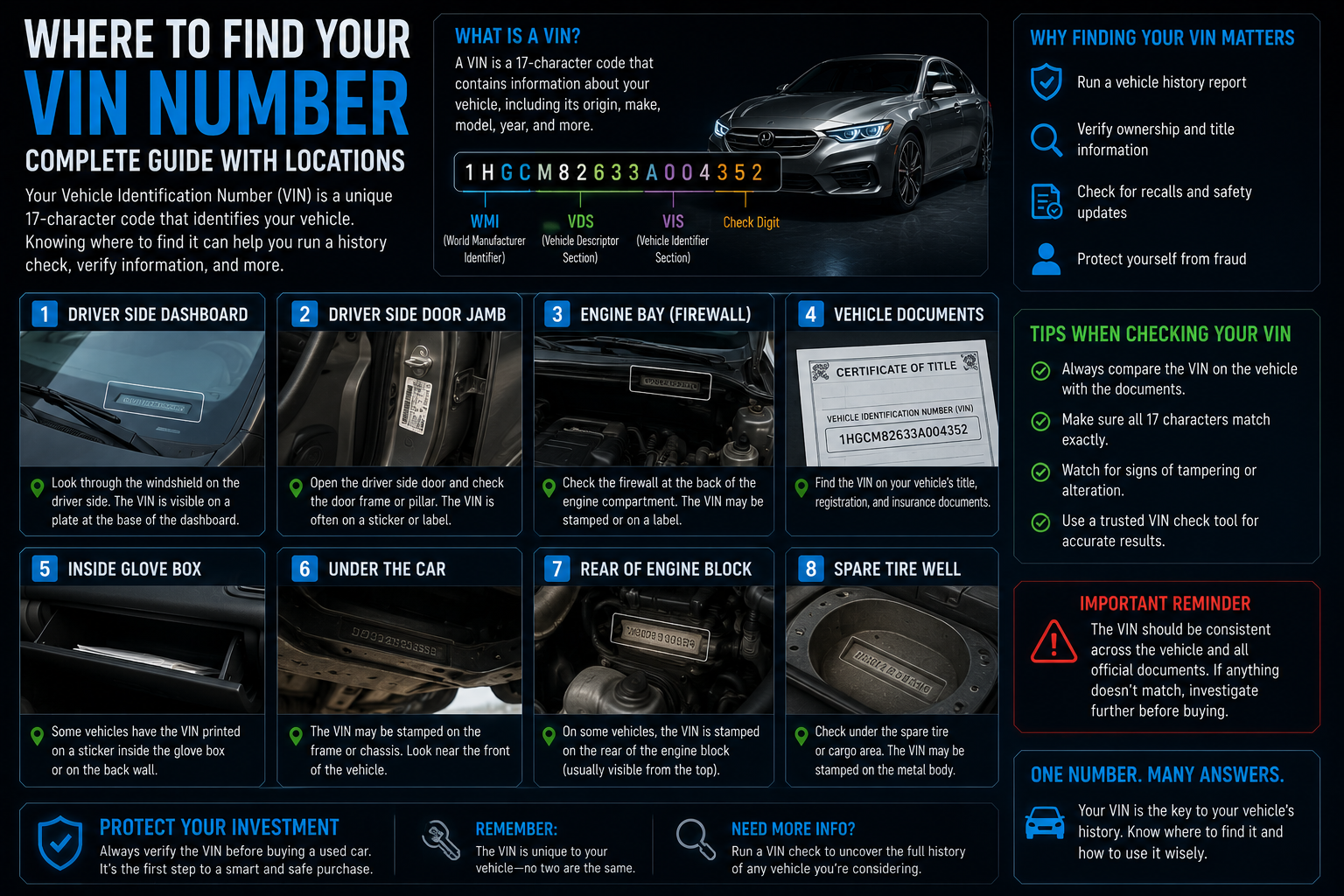
The most universal location to find your VIN number is on the driver’s side dashboard, right where the glass meets the hood. To see it clearly, you should stand outside the vehicle and look through the lower corner of the windshield. This metal plate is designed to be permanent and easily visible to law enforcement or inspectors without needing to enter the vehicle, making it the primary point of reference for most VIN decoders.
2. The Driver-Side Door Jam
Another highly reliable physical location is the B-pillar, which is the frame visible when you open the driver’s side door. Look for a durable sticker or metal plate that contains technical data such as tire pressure and gross vehicle weight. In the midst of this information, you will find your VIN number printed clearly. This sticker is built to be tamper-evident; if it looks peeled or scratched, it could be a sign of vehicle cloning or a previous major accident.
3. Under the Hood (Engine Block)
For older vehicles or specific European imports, you might need to pop the hood to find your VIN number. It is often stamped directly onto the front of the engine block or the firewall (the metal partition between the engine and the cabin). This location is used as a secondary verification point to ensure the engine currently in the car actually belongs to the chassis it was manufactured with.
4. Inside the Spare Tire Well
If the external locations are obscured by dirt or damage, you can often find your VIN number hidden in the trunk. Many manufacturers stamp the identification number onto the floor pan, specifically under the spare tire or tucked into the corner of the trunk lining. This is considered a “hidden” VIN and is frequently used by authorities to identify stolen vehicles that have had their dashboard plates removed.
5. Official Vehicle Registration Documents
If you don’t have physical access to the car, the easiest way to find your VIN number is by looking at your state-issued registration card. This document is required to be in the vehicle at all times and will always list the 17-digit code. Always double-check that the number on your paperwork matches the number physically stamped on the dashboard to avoid administrative errors at the DMV.
6. Your Insurance Policy Paperwork
Insurance companies rely heavily on the VIN to determine the correct premium for your specific make and model. Consequently, you can always find your VIN number on your insurance ID card or your full policy declaration page. If you use a mobile app for your insurance provider, the VIN is usually listed under the “Vehicle Details” or “Coverage” section for quick access.
7. The Vehicle Title (Pink Slip)
The vehicle title is the ultimate legal proof of ownership, and it serves as the definitive source to find your VIN number. Before purchasing a used car, you should always compare the VIN printed on the title with the VIN on the dashboard. If there is even a one-digit discrepancy, it could indicate a “title washing” scam or a clerical error that could make the car impossible to register in your name later.
Knowing exactly where to find your identification number is the first step in verifying a vehicle’s legitimacy. Once you have located the 17-digit code on the dashboard or door jamb, you should find your VIN number in our database to pull a full history report. Cross-referencing the physical locations with a digital check is the best way to ensure the car you are looking at is safe, legal, and worth the investment.
Final Verification Steps
Once you find your VIN number, it is crucial to verify its safety status. You should cross-reference your identification number with the Official NHTSA Recall Database to ensure there are no life-threatening defects currently flagged for your car. Furthermore, understanding the ISO 3779 international standards can help you decode the characters and verify the factory specs. If you have any doubts about the vehicle’s past, you can run a free VIN check here to get a comprehensive history of the car’s ownership and maintenance records.

Leave a Reply