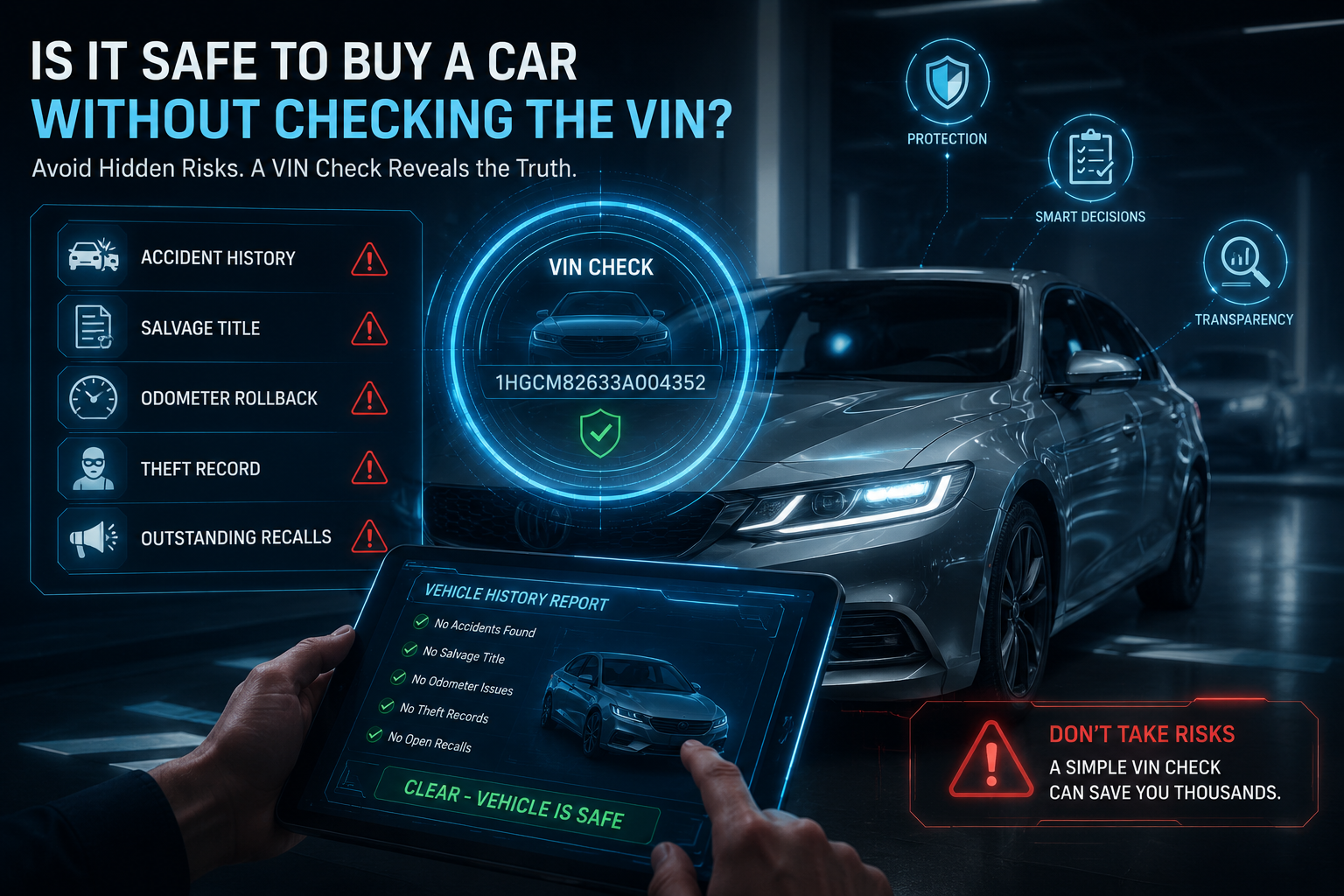
A VIN Check
Checking the VIN to Prevent VIN Cloning
One of the most sophisticated risks of skipping a VIN check is falling victim to VIN cloning. This happens when a criminal takes a valid VIN from a legally registered car (often from a dealership lot or a scrap yard) and attaches it to a stolen or salvaged vehicle of the same make and model. Without running a digital history report, the car might look perfectly legal on the outside, but you could end up purchasing a stolen vehicle that the police will eventually impound, leaving you with no car and no money.
What a Visual Inspection Misses vs. Checking the VIN
Even the most experienced mechanic can’t see a “Lien” or a “Salvage Brand” just by looking at the engine. A physical inspection tells you the car’s current condition, but the VIN tells you its legal status. For example:
Flood Damage: Cars from hurricane zones are often dried out and sold in other states. The electronics may fail months later, but the “Flood” brand stays on the VIN forever.
Odometer Rollbacks: Scammers can electronically roll back a digital dashboard. The only way to catch this is to compare the current mileage with the “last reported mileage” found in the VIN history.
Important Locations for Checking the VIN for Checking the VIN History
To ensure the VIN hasn’t been tampered with, you should verify it in at least three locations on the vehicle. If they don’t match, walk away from the deal immediately:
The Dashboard: Visible through the driver’s side bottom corner of the windshield.
The Door Pillar: Look for a sticker on the driver’s side door frame near where the door latches.
The Engine Block: Many manufacturers stamp the VIN directly onto the front of the engine or the frame.
The Hidden Costs of an Unknown History
When you buy a car without checking the VIN, you aren’t just risking the car’s reliability; you are risking your financial future. If a car has an “unpaid lien” (meaning the previous owner still owes a bank money), the bank can legally repossess the car from YOU—even if you paid the seller in full. A VIN check is the only way to verify that a title is “clear” and ready for transfer.
Your Pre-Purchase VIN Checklist
Before you hand over any cash, follow this protocol to protect yourself:
* **The “Window vs. Door” Test:** Does the VIN on the dashboard match the one on the door sticker? If not, the car may have been rebuilt from two different vehicles (a practice known as “clipping”).
* **Recall Verification:** Many sellers hide open safety recalls. Use a free tool to see if the car has dangerous defects like exploding airbags or fire risks that haven’t been fixed.
* **Service Record Gaps:** Look for long periods of time where the car wasn’t registered or serviced. This often indicates the car was sitting in a repair shop or salvage yard.
Frequently Asked Questions About VIN Checks
Can I check a VIN for free?
Yes, platforms like VinForFree allow you to decode 17-digit identification numbers to verify factory specifications and safety recalls without a subscription.
Does a VIN check show every accident?
No. While many accidents are reported via insurance or police records, private repairs may not appear. This is why checking the VIN should always be paired with a physical inspection.
What should I do if the VINs don’t match?
If the VIN on the dashboard is different from the door pillar or the title, the vehicle has likely been tampered with or “clipped.” You should avoid the purchase immediately.
How to Spot a “Red Flag” VIN
When you are checking the VIN, you aren’t just looking for a clean report; you are looking for consistency. Professional scammers have become experts at “VIN Switching,” where they take a VIN from a totaled vehicle and physically move the plate to a stolen car.
To protect yourself, always look for these three physical signs during your inspection:
-
Scratched Rivets: The VIN plate on the dashboard is held down by special circular or flower-shaped rivets. If these look scratched, bent, or replaced with standard screws, someone has likely tampered with the plate.
-
Mismatched Labels: Manufacturers place “Anti-Theft” labels on various body panels (fenders, hood, trunk). Checking the VIN digits on these stickers against the dashboard VIN is the fastest way to see if the car was rebuilt using parts from different vehicles.
-
The “Check Digit” Validation: The 9th character of every 17-digit VIN is a “Check Digit.” This is a mathematical security feature used by the Department of Transportation to verify the VIN is real. If an online decoder tells you the VIN is “Invalid,” it is a guaranteed sign of a counterfeit vehicle.

Leave a Reply