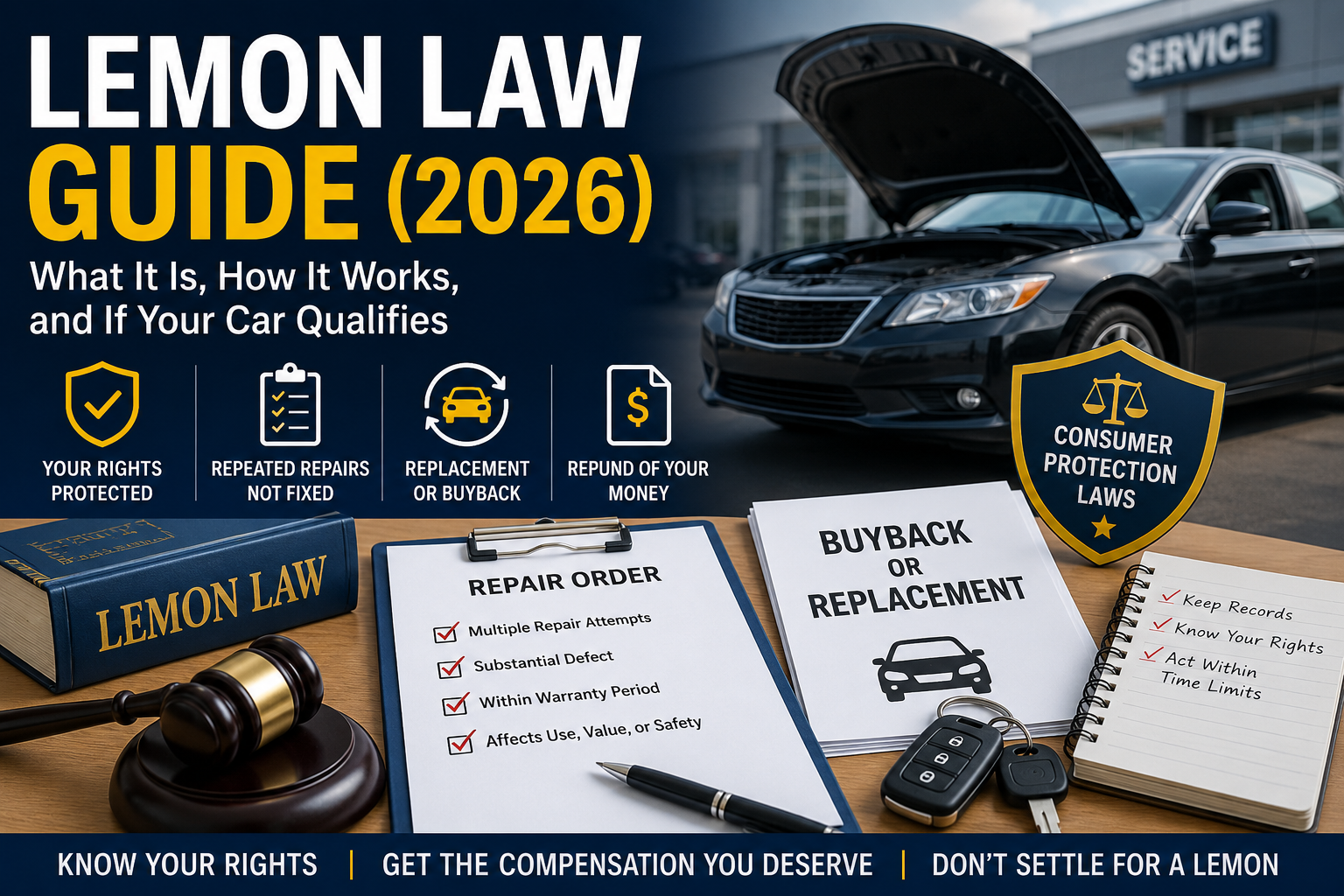
Lemon Law Guide (2026): What It Is, How It Works, and If Your Car Qualifies
What Is Lemon Law? Lemon Laws are consumer protection laws designed to help vehicle owners when serious defects cannot be repaired after a reasonable number of attempts. This guide explains how Lemon Law works, which vehicles may qualify, and what options consumers have when manufacturers cannot fix recurring problems.
This complete Lemon Law Guide explains what Lemon Law is, how it works, which vehicles qualify, how many repair attempts are typically required, and what options may be available if you believe your vehicle is a lemon.
Before pursuing a Lemon Law claim, it is important to gather documentation, repair records, warranty information, recall history, and vehicle details. Many owners start by running a free VIN check to review vehicle information and open recalls.
What Is Lemon Law?
Lemon Laws are consumer protection laws designed to help vehicle owners when a new vehicle has substantial defects that cannot be repaired within a reasonable number of attempts.
These laws generally require manufacturers to repair, replace, or repurchase qualifying vehicles.
The purpose of Lemon Law is to protect consumers from being stuck with a vehicle that has serious defects affecting:
Before purchasing any used vehicle, many buyers start with a free
VIN Decoder
to verify factory specifications and vehicle information.
- Safety
- Use
- Value
- Reliability
While Lemon Law rules vary by state, most laws follow similar principles.
What Is Considered a Lemon Vehicle?
A vehicle may qualify as a lemon when:
- A substantial defect exists
- The defect occurs during the warranty period
- Multiple repair attempts fail
- The defect significantly impacts vehicle use, value, or safety
Examples include:
- Engine failures
- Transmission problems
- Electrical system failures
- Brake defects
- Steering issues
- Persistent warning lights
- Repeated stalling
- Battery system failures
- Hybrid or EV drivetrain defects
Minor cosmetic issues generally do not qualify.
How Many Repair Attempts Are Required?
One of the most common questions is:
How many times must a dealer attempt repairs?
The answer depends on state law.
In many states:
- 3–4 unsuccessful repair attempts may qualify
- 1 failed repair attempt may qualify if the issue creates a serious safety hazard
- 30 or more cumulative days out of service may qualify
Always check your state’s specific requirements.
Does Lemon Law Apply to New Cars?
Yes.
Most Lemon Laws primarily protect new vehicle buyers.
Covered vehicles often include:
- Cars
- SUVs
- Trucks
- Vans
- Crossovers
Coverage usually begins during the manufacturer’s warranty period.
Does Lemon Law Apply to Used Cars?
Sometimes.
Coverage depends on:
- State law
- Remaining factory warranty
- Certified pre-owned status
- Extended warranty coverage
Some states offer specific protections for used vehicles, while others focus mainly on new vehicles.
Does Lemon Law Cover Leased Vehicles?
Often yes.
Many state Lemon Laws provide protections for leased vehicles as well as purchased vehicles.
The key factors usually involve:
- Warranty coverage
- Repair history
- Defect severity
What Types of Problems May Qualify?
Potential qualifying defects include:
Engine Problems
- Stalling
- Misfires
- Excessive oil consumption
- Engine failure
Transmission Problems
- Hard shifting
- Slipping gears
- Failure to engage
Electrical Problems
- Dead batteries
- Infotainment failures
- Persistent warning lights
Safety Defects
- Brake failures
- Steering issues
- Airbag malfunctions
EV and Hybrid Problems
- Battery failures
- Charging issues
- Drive motor failures
- High-voltage system faults
What Does Not Usually Qualify?
Generally, these issues may not qualify:
- Normal wear and tear
- Minor rattles
- Cosmetic defects
- Owner-caused damage
- Problems caused by modifications
- Neglected maintenance
What Happens If Your Vehicle Qualifies?
If a manufacturer determines the vehicle qualifies under Lemon Law, possible outcomes include:
Vehicle Buyback
The manufacturer repurchases the vehicle.
This may include:
- Purchase price
- Taxes
- Registration fees
- Certain finance costs
Vehicle Replacement
The manufacturer provides a comparable replacement vehicle.
Cash Settlement
In some cases, owners receive financial compensation while keeping the vehicle.
What Is a Lemon Law Buyback Vehicle?
A Lemon Law Buyback is a vehicle repurchased by a manufacturer because of qualifying defects.
Many states require disclosure if the vehicle is later resold.
Buyers should always review:
- Title history
- Vehicle history reports
- Repair records
- Recall information
Can Lemon Law Vehicles Be Resold?
Yes.
In many states, buyback vehicles can legally be resold after repairs are completed.
However, disclosure requirements often apply.
This is why checking a vehicle’s history before purchase is important.
Lemon Law vs Vehicle Warranty
Many people confuse warranties and Lemon Laws.
Warranty
A warranty promises repairs for covered defects.
Lemon Law
Lemon Law provides additional protections when repairs repeatedly fail.
A vehicle may still qualify for Lemon Law even after multiple warranty repairs.
What Is the Magnuson-Moss Warranty Act?
The Magnuson-Moss Warranty Act is a federal consumer protection law.
It may provide remedies when manufacturers fail to honor warranty obligations.
Unlike state Lemon Laws, this federal law can sometimes apply beyond traditional Lemon Law requirements.
Do Vehicle Recalls Mean a Car Is a Lemon?
Not necessarily.
A recall does not automatically make a vehicle a lemon.
However:
- Multiple recall-related repairs
- Ongoing safety issues
- Repeated repair failures
could potentially support a Lemon Law claim.
Documentation You Should Keep
If you believe your vehicle may qualify:
Save:
- Repair invoices
- Warranty documents
- Service records
- Recall notices
- Dealer communications
- Purchase contract
Strong documentation significantly improves your ability to prove a claim.
How to Check a Vehicle Before Buying
Before purchasing a used vehicle:
- Verify the VIN
- Check open recalls
- Review title history
- Check accident records
- Look for buyback disclosures
- Review maintenance history
These steps can help identify potential issues before purchase.
Frequently Asked Questions
How long do Lemon Law claims take?
Typically several weeks to several months depending on state law and manufacturer response.
Can a used car qualify?
Sometimes, depending on warranty coverage and state law.
Does Lemon Law apply to electric vehicles?
Yes. EVs may qualify if defects substantially affect use, value, or safety.
Is a recall enough to qualify?
No. A recall alone does not automatically qualify a vehicle.
Can I sell a lemon vehicle?
Yes, but disclosure requirements may apply depending on state law.
Final Thoughts
Lemon Laws exist to protect consumers from serious vehicle defects that manufacturers cannot repair after a reasonable number of attempts.
If your vehicle experiences repeated problems involving the engine, transmission, electrical system, brakes, steering, battery system, or other major components, it may be worth researching your rights under applicable Lemon Law protections.
Before pursuing a claim, gather repair records, warranty documentation, recall information, and vehicle history details to better understand your situation.
More here:
Related reading:

Leave a Reply