7 Secrets to Understanding a VIN Decoding Report Like a Pro
1. The Power of the Vehicle Identification Number
Every modern vehicle is assigned a unique 17-character fingerprint. When you use a free tool to understand a VIN decoding report, you are accessing a massive database of manufacturing specifications. This number is not random; it is a structured code that tells the story of the vehicle from the moment it left the factory floor. Learning how to properly understand a VIN decoding report is the first step in being a savvy car buyer and protecting yourself from costly mistakes.
2. Identifying the Origin and Manufacturer
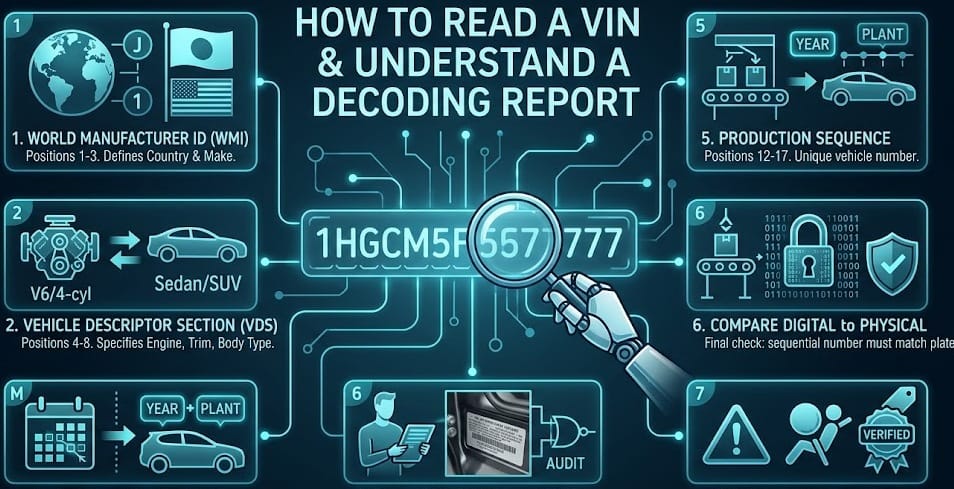
The first three characters of your report are known as the World Manufacturer Identifier (WMI). This section is vital for verifying authenticity. For example, a VIN starting with ‘1’, ‘4’, or ‘5’ indicates the car was assembled in the United States, while ‘J’ signifies Japan. By cross-referencing this with the seller’s claims, you can quickly spot potential discrepancies in the vehicle’s history. If a seller claims a car is a domestic build but the report shows an international WMI, that is a major red flag.
3. Detailed Vehicle Attributes and Specs
The fourth through eighth characters represent the Vehicle Descriptor Section (VDS). This is where the “meat” of the data lives. Your report will detail the engine type, body style, and trim level. If you are looking at a 2003 Honda Accord, the report will specify if it is a V6 or a 4-cylinder model. This is crucial because many sellers may misrepresent trim levels to increase the asking price. By using our tool to understand a VIN decoding report, you can see the exact factory specifications.
4. The Check Digit: Your Shield Against Fraud
The ninth character is the “Check Digit.” This is a mathematical security feature used to verify the validity of the entire VIN. Our decoding engine uses a specific algorithm to ensure the VIN isn’t a “cloned” or fake number. If the check digit doesn’t match the rest of the string, the report will flag it, alerting you to a potential scam before you spend a single dollar. This automated check is one of the most powerful features of modern automotive data.
5. Decoding the Model Year and Assembly Plant
The tenth character identifies the model year, and the eleventh shows the specific plant where the vehicle was built. In our Sample VIN Report, you can see how this data is presented clearly. Knowing the assembly plant can even help you track down specific factory recalls that only affected one location, giving you an edge in safety research. It provides a level of transparency that was previously only available to dealerships.
6. Using Data to Spot Safety Recalls
One of the most valuable parts of your report is the safety integration. According to the NHTSA official guidelines, millions of vehicles are on the road with unrepaired recalls. When you understand a VIN decoding report, you should immediately look for the “Recall” section to see if there are open safety bulletins for the airbags, fuel system, or brakes. Addressing these issues early can save lives and prevent expensive mechanical failures down the road.
7. Comparing Physical Plates to Digital Data
The final six characters are the sequential serial number. To fully understand a VIN decoding report, you must compare the digital output to the physical VIN plate on the driver’s side dashboard or the door jamb. If the “Sequential Number” on the car doesn’t match your report, the vehicle may have been rebuilt or tampered with. This final check is your best defense against buying a “totaled” car that has been illegally put back on the road. Always trust the data, but verify it with the physical vehicle.
Related reading: