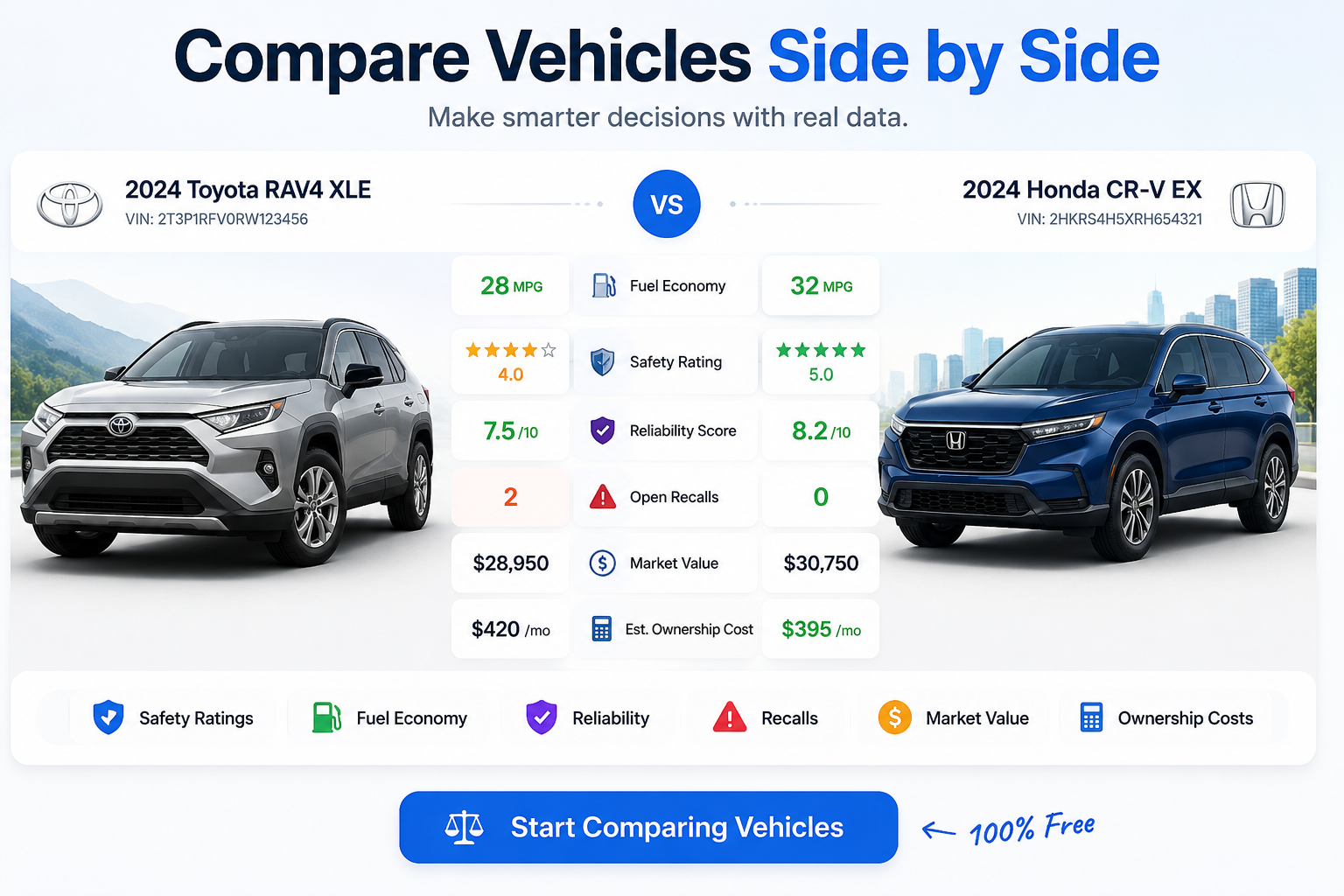
🔍 Side-by-Side VIN Comparison
Full specs, safety, EV data, recalls, and cost comparison — same depth as a full VIN report, for both cars.
Compare Two Cars by VIN — Free Side-by-Side Tool
Comparing two vehicles before buying a used car is one of the smartest things you can do — and with VinForFree’s free VIN comparison tool, you can do it in seconds. Enter two 17-character VINs and get a full side-by-side breakdown of specs, recalls, fuel economy, safety ratings, and estimated market value.
→ Compare Two Vehicles by VIN Now — No Signup Required
Why Compare Two Cars by VIN?
When shopping for a used vehicle, it’s easy to get overwhelmed comparing listings across different sites. A VIN comparison cuts through the noise by pulling verified data directly from NHTSA and EPA government databases — the same data used by dealerships and insurers.
Here’s what you can compare side-by-side:
- Open recalls — see exactly how many unresolved safety recalls each vehicle has
- Engine and drivetrain specs — cylinders, displacement, horsepower, transmission type
- Fuel economy — city, highway, and combined MPG from EPA data
- Safety features — ABS, ESC, airbags, collision warning systems
- Estimated market value — see which vehicle is priced more competitively
- Environmental impact — CO₂ emissions, annual fuel cost, barrels of oil per year
How to Compare Two Cars by VIN
It takes under 30 seconds:
- Find the VIN on each vehicle — it’s on the dashboard near the windshield, driver’s door jamb, or on the title. Here’s exactly where to find it.
- Go to the VinForFree Compare Tool
- Enter both 17-character VINs
- Click Compare — results load instantly
No account required. No email needed.
VIN Comparison vs. Paid Vehicle History Reports
Paid services like Carfax ($44.99) and AutoCheck focus on accident history, title records, and odometer data — information that comes from insurance companies and state DMVs. VinForFree’s free comparison tool focuses on factory specs, government safety data, and fuel economy — information that paid services often bury in fine print.
For the most complete picture, use VinForFree’s free comparison alongside a full history check. If either vehicle raises red flags in the comparison — high recalls or poor complaint history — skip the paid report and walk away. If both look clean, a $4.99 VIN Pro Plus report gives you the full accident and title history before you commit.
Common Use Cases for VIN Comparison
Choosing between two listings: Found a 2019 Honda Accord and a 2019 Toyota Camry at similar prices? Compare their VINs to see which has fewer recalls and better fuel economy.
Negotiating price: If one vehicle has significantly more open recalls, use that as leverage to negotiate a lower price.
Fleet purchasing: Businesses purchasing multiple vehicles can quickly compare specs and safety records across candidates without paying for multiple history reports.
Evaluating a trade-in offer: Compare your current vehicle against the one a dealer is offering in a trade — see exactly what you’re getting versus what you’re giving up.
Frequently Asked Questions
Is the VIN comparison tool really free?
Yes. The core comparison tool — including specs, recalls, fuel economy, and safety data — is free to use, with no signup required. Full accident history and title records are available through VIN Pro Plus for $4.99 per report.
How many VINs can I compare at once?
The current tool supports two VINs side-by-side. You can run multiple comparisons in sequence to evaluate more vehicles.
Where does the comparison data come from?
All data comes from NHTSA (National Highway Traffic Safety Administration) and EPA (Environmental Protection Agency) public databases — the same government sources used by dealerships and automotive professionals.
Can I compare a car that’s been in an accident?
The free comparison shows NHTSA safety and recall data but does not include accident history. To check accident records, use VinForFree’s free VIN check and unlock the full history with VIN Pro Plus.
What if one VIN returns no results?
If a VIN returns limited data, it may be a very old vehicle (pre-1981), a grey market import, or have a VIN that doesn’t match NHTSA records. Check that you’ve entered all 17 characters correctly and that the VIN doesn’t contain I, O, or Q.
Ready to compare? Use the free VIN comparison tool now →